PRNewswire
Hong Kong, September 28: Recently, spatial omics has become a powerful tool, enabling researchers to see not only what molecules are present in a tissue, but also where they are located and how they are organised across cells, tissue structures and local microenvironments. This spatial context has significantly deepened our understanding of cancer, neurobiology and immunology. Yet as the field keeps advancing, an important question remains: How many of these powerful technologies are truly ready for routine clinical use?
The most informative technologies are often also the most demanding, requiring expensive instruments, reliance on sequencing, complicated tissue preparation, lengthy workflows and substantial computational resources. While these requirements are manageable in well-resourced research settings, they can become major obstacles in real-world pathology laboratories, where time-sensitive biopsies, clinical practicality and broad patient access are critical considerations.
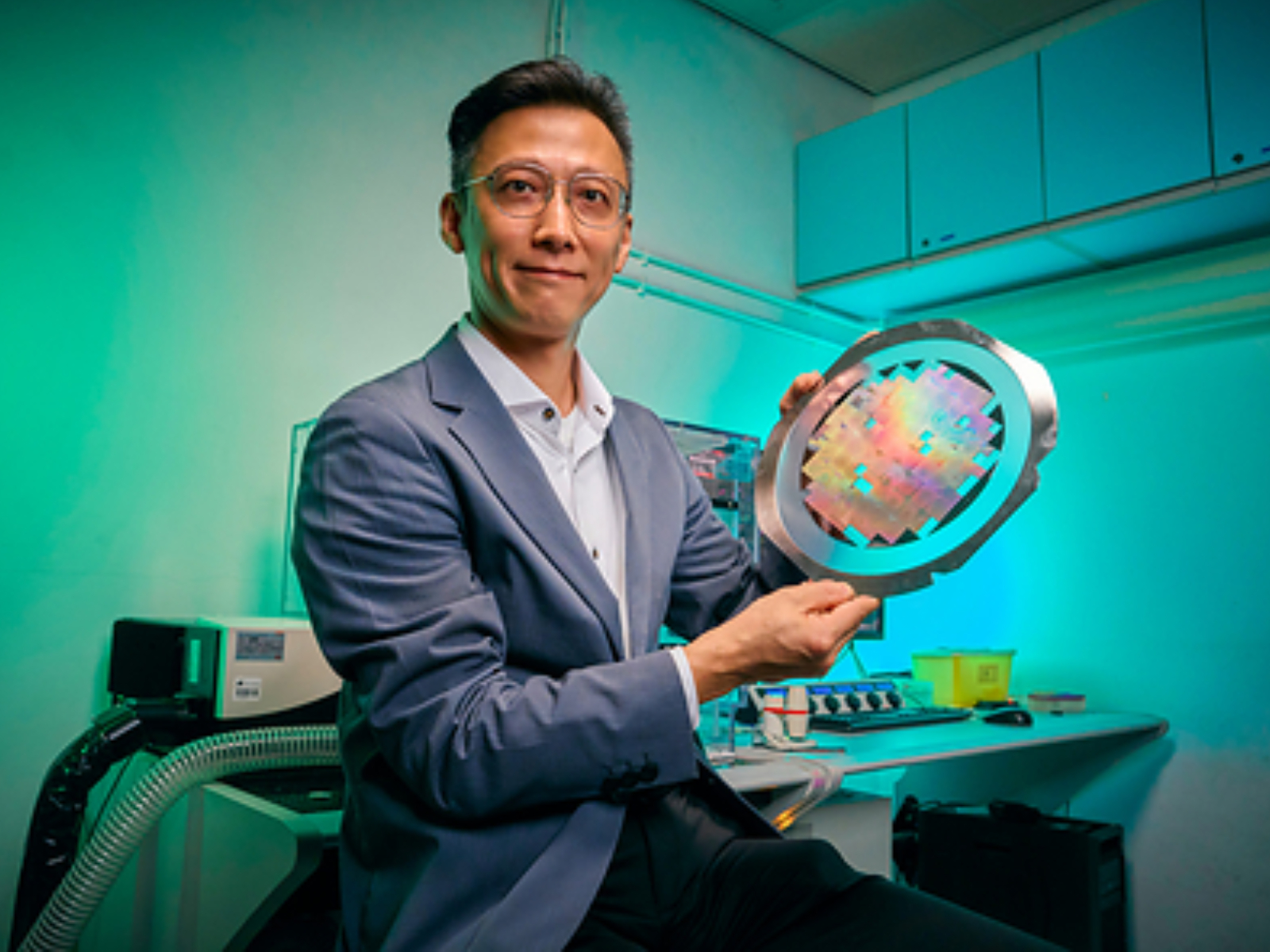
To address this challenge, a research team led by Professor Shi Peng from the Department of Biomedical Engineering in College of Biomedicine at City University of Hong Kong (CityUHK) has presented Spectrum-FISH, a sequencing-free and amplification-free approach for the spatial analysis of tissue. The method is based on a "touch-and-go" molecular fishing strategy that uses vertically aligned nanoprobes. Unlike existing spatial omics technologies, which typically require extensive tissue pre-treatment, Spectrum-FISH can be applied directly to freshly prepared tissue samples. Spatial information is preserved through a simple yet effective registration strategy, allowing researchers to map molecular signals back to tissue structures and individual cells.
Using a series of experiments involving developing mouse neural tube and olfactory bulb and fresh human colorectal biopsy specimens, the research team investigated whether spatial profiling could be made more accessible by reducing dependence on sequencing, minimising tissue processing and lowering assay costs, while maintaining biologically informative resolution. Spectrum-FISH's compatibility with fresh tissues and sequencing-free design offer advantages in affordability and scalability. Its coordinate-preserving sampling strategy also points to new possibilities for spatial analysis in live or minimally processed tissues. Moreover, its ability to profile messenger RNAs (mRNAs), microRNAs (miRNAs) and RNA methylation provides a potential pathway towards spatial multi-omics that are less dependent on large-scale sequencing infrastructure.
The findings were published recently in Nature Biomedical Engineering in a paper entitled "Sequencing-free spatial profiling of post-transcriptional regulation in fresh tissues using nanoneedle arrays". The study aligns closely with the themes discussed in a recent comment article, "Clinical translation of spatial omics", co-authored by Professor Shi and published in Nature Reviews Bioengineering. Together, the two publications underscore the growing momentum towards the clinical translation of spatial omics.
"This project reminded us that innovation in biomedicine is about more than enabling measurements; it must also ensure they are practical and accessible," said Professor Shi. "By simplifying workflows and reducing costs while preserving spatial insight, we hope Spectrum-FISH demonstrates how spatial omics technologies can move closer to routine clinical application. Ultimately, we believe the future of spatial omics will be defined not only by how deeply we can map tissues, but also by how effectively we can translate those maps into meaningful clinical action."
In addition, a related US patent filed by Professor Shi—System and Method for Tissue-Wide Single Cell Post-Transcriptional Profiling of Multiple Molecular Targets—was recently granted, further highlighting the strong translational potential and promising future in precision medicine.
(ADVERTORIAL DISCLAIMER: The above press release has been provided by PRNewswire. ANI will not be responsible in any way for the content of the same.)
CityUHK researchers advance spatial omics to routine clinical use