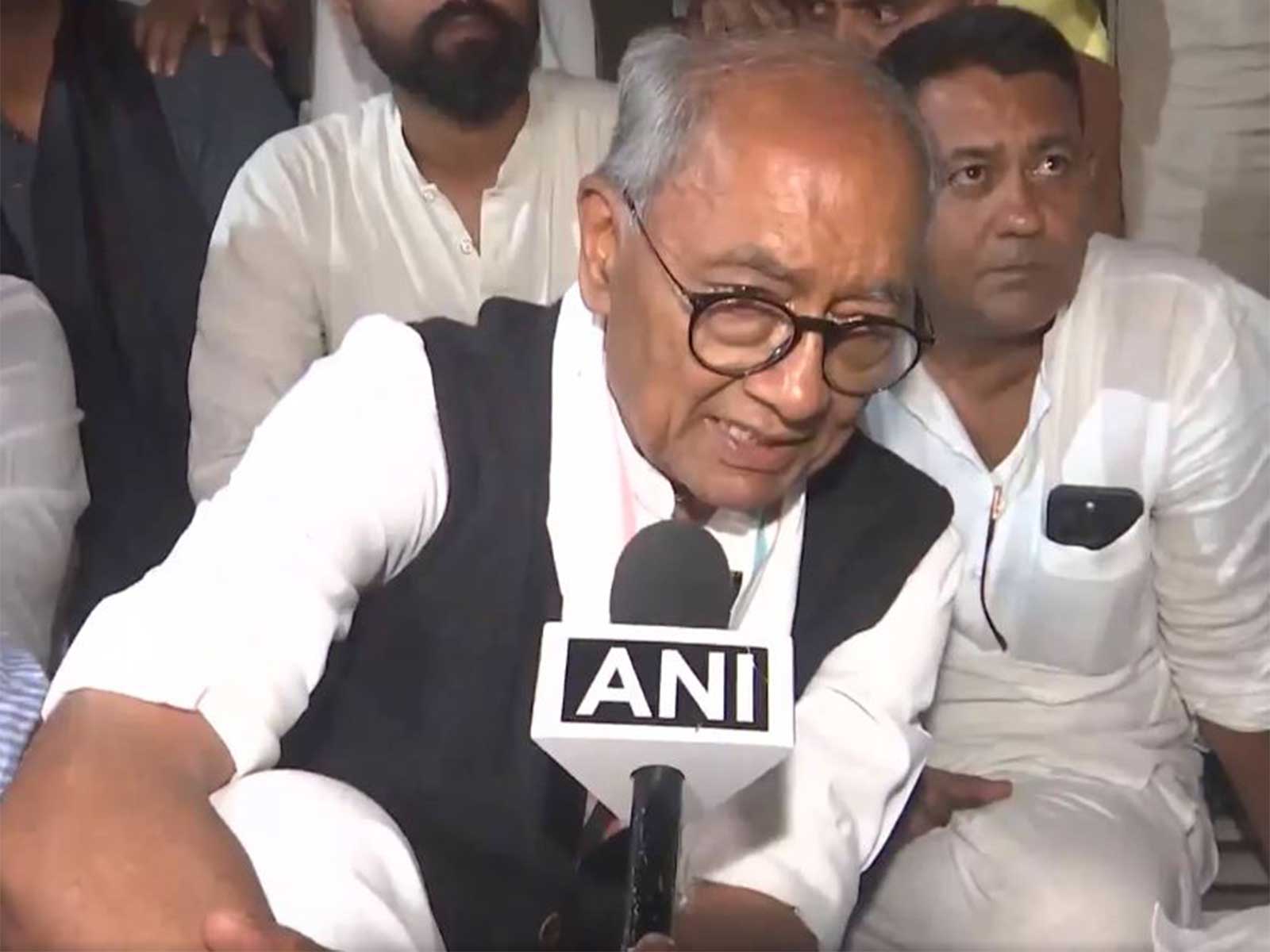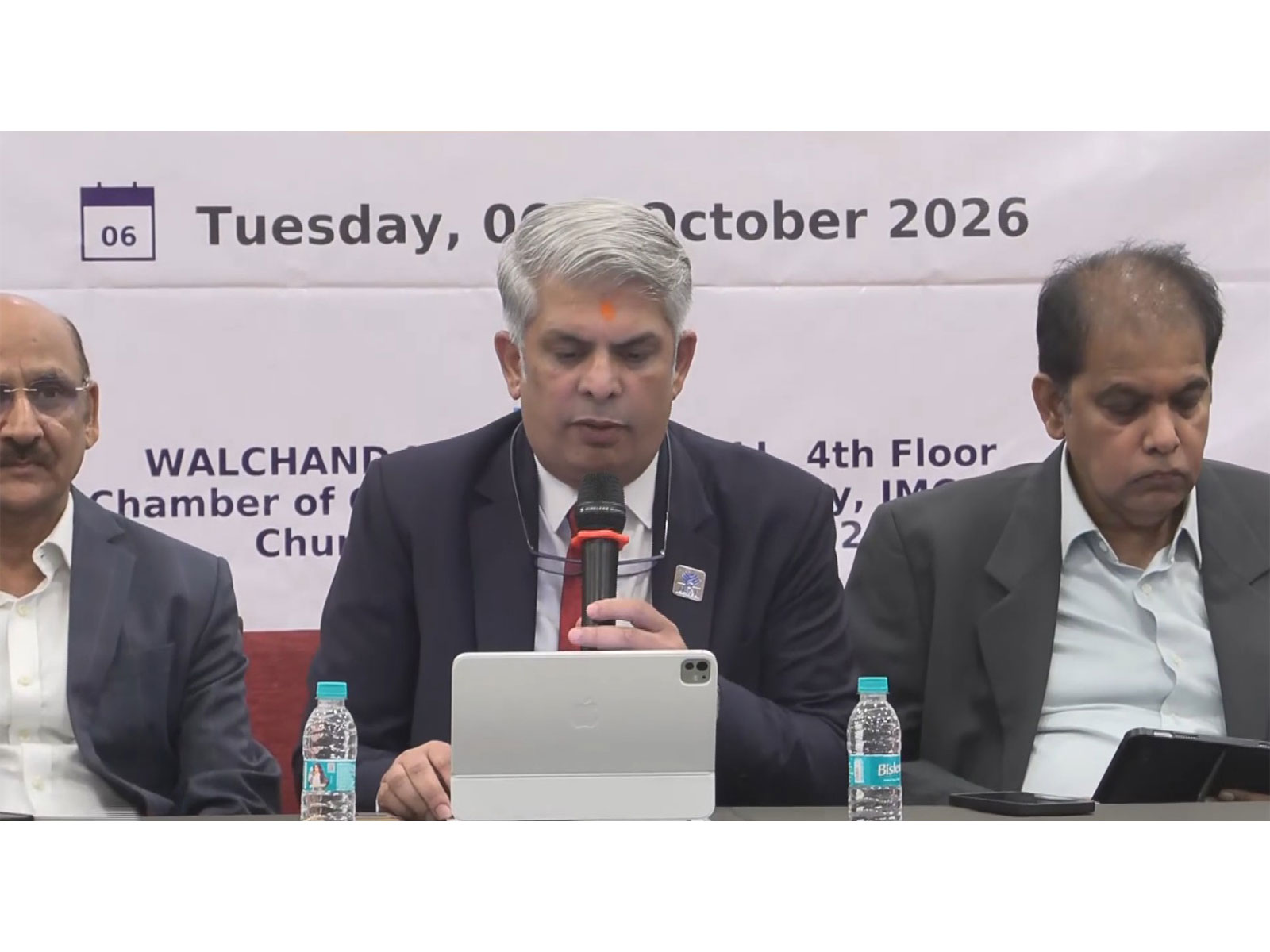
Mumbai (Maharashtra) [India], September 23 (ANI): US President Donald Trump’s fiery warning at the UN General Assembly of "total annihilation" for Iran is largely an election campaign strategy, while an uneasy West Asian truce is quietly keeping crude prices capped near USD 100 per barrel, according to Anindya Banerjee, Head of Commodities Research at Kotak Securities.
"He is on an election campaign, so it's kind of an appeal to his voters... a lot of hyperbole is in that annihilation," Banerjee said.
In an interaction with ANI News in Mumbai, he pointed out that peak global supply disruptions have dropped from 9–10 million barrels per day (bpd) down to 5–6 million bpd, bolstered by Saudi crude transit bypasses through Oman and the UAE alongside the restarted East-West pipeline.
He added that any breakthrough in ongoing Russia-Ukraine diplomatic efforts could trigger a sizable downside unwind in energy costs, emphasising that "the crisis right now is fuel" rather than crude.
"The longer the oil prices stay above USD 100—why even USD 100, above USD 90—it will start to have multiple rounds of impact on the economy," Banerjee said.
Differentiating current energy trends from broader markets, he described the rally as temporary. "Energy is in a thematic kind of a bull run... because it is one of the most artificial bull runs I've seen since I started tracking the markets," he remarked.
Turning to US sanctions and their impact on Indian refiners, Banerjee observed that Russian oil imports to India fell below 2 million bpd as discounts on spot Urals crude vanished due to loading disruptions caused by attacks on Russian infrastructure.
Consequently, Indian refiners shifted toward alternative offerings closer to home, such as Saudi crude.
On proposed US secondary tariff legislation, Banerjee remarked that applying maximum tariffs on energy buyers like India or China remains unlikely because it would exacerbate domestic US inflation, pushing US diesel toward USD 7.50 to USD 8.00 per gallon.
"I don't see a reason why US would like to make things complicated for itself by pursuing the tariff policy under this," Banerjee noted.
Evaluating India’s energy resilience, Banerjee emphasised that "our effective energy diplomacy has ensured that it itself is the insurance cover," allowing the nation to dynamically switch sources and keep domestic fuel price increases lower.
Explaining how higher energy costs ripple through the national economy, he noted: "It kind of acts as a tax on households. How much is the tax depends on who takes how much hit because there are three balance sheets on which this impact goes through: OMCs, government, corporates, and retail households".
Warning of natural gas supply risks heading into winter, he added, "Where the trouble is still there at a global level is gas, which means natural gas". Looking at global choke points, he advised patience: "Till it lasts, we have to simply hunker down and just wait for the storm to pass".
On foreign exchange and central bank actions, Banerjee outlined that USD/INR should trade in a narrow range. "95.70, 95.60 is the best case for the rupee and 96 half to be protected from RBI... I think the RBI will push back against any attempt to break past 96 half because then it can try to make a new all-time low on the rupee," Banerjee stated.
He noted that persistent crude spikes could force the central bank's hand: "That's why RBI is going to be under pressure to hike rates". "If Brent were to flare up above 108, 110, then RBI will be intervening very aggressively because then there is a risk of further rupee depreciation towards 98 plus levels," Banerjee added.
Regarding precious metals, Banerjee highlighted the underlying strength of bullion as hard money. "Commodities are increasingly behaving like an alternative form of currency," he explained, contrasting physical assets against fiat paper currency.
"Gold doesn't need a debtor sitting across the table. It doesn't need to be refinanced, and it cannot be printed," Banerjee said. Differentiating the metal from gold, he observed: "Gold is the monetary heavyweight. Silver is the hybrid".
While near-term real yields around 2.64 per cent have temporarily capped metal breakouts—with Banerjee noting, "The big rally is going to happen when we can see the interest rate hikes are behind us"—he expects substantial long-term gains driven by fiscal dynamics. (ANI)
Donald Trump’s UN speech hyperbole, uneasy truce capping oil at USD 100: Kotak Securities