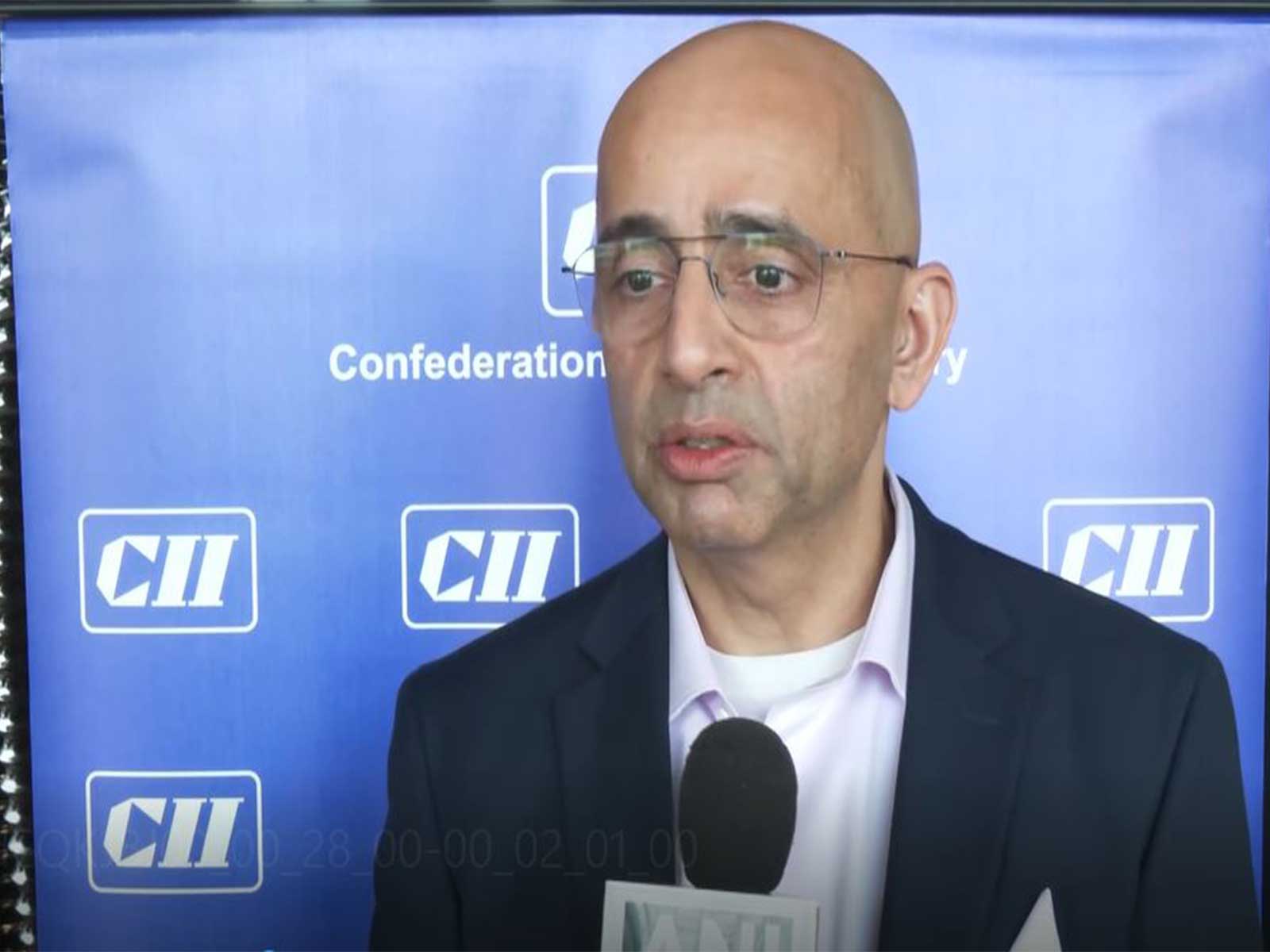
Mumbai (Maharashtra) [India], October 14 (ANI): Indian insurance companies invest less than 2 per cent of their assets in alternative investments, compared with around 20 per cent in overseas markets, highlighting significant scope for domestic institutional investors to increase their participation in funds that finance infrastructure, businesses and other long-term projects, according to Aashwin Dugal, CEO of Nippon Life India AIF Management Ltd.
Speaking exclusively to ANI on the sidelines of the 4th CII Alternative Investment Fund Summit in Mumbai on Wednesday, Dugal said India's alternative investment fund (AIF) industry was still relatively small compared with developed markets, where insurance companies, pension funds and sovereign wealth funds play a major role in financing investments.
"Insurance companies overseas today would be investing about 20 per cent of their AUM in alternates. That percentage in India is less than 2 per cent," he said.
Dugal said institutional participation in alternative investments was gradually increasing in India as investors became more comfortable with the asset class and gained experience across investment cycles.
He said the growing participation of long-term investors could help alternative investment funds play a greater role in financing India's economic expansion.
"As allocators, like insurance companies, become more comfortable and complete two or three cycles of money coming back, I think that will give them more confidence," he said.
He also highlighted the role of pension funds, saying regulatory changes allowing investments in private credit were helping build confidence in the sector.
"I think you are now seeing more confidence and more money coming into this space," Dugal added.
Alternative investment funds invest in assets beyond traditional stocks and bonds, including private equity, venture capital, infrastructure and private credit. These funds can provide long-term financing to businesses that may not be adequately served by traditional sources of funding.
Dugal said Category II AIFs, in particular, were already providing long-term capital to businesses and productive assets in India.
He noted that while banks and insurance companies would remain central to financing economic growth, alternative investment funds could help bridge funding gaps for smaller companies seeking to expand and eventually enter public markets.
However, Dugal cautioned that the growing flow of institutional money into alternative assets would also require fund managers to strengthen their risk management practices.
"What will be critical is how fund managers manage that capital in terms of managing risk," he said.
On private credit, he stressed the importance of assessing borrowers' financial strength, funding needs and repayment capacity before making investments.
"Credit underwriting will be very critical. Companies that you're lending to, measuring risk and managing that risk is going to be extremely important," he said.
Dugal said India's alternative investment industry had already matured considerably and was likely to play a more meaningful role in financing businesses over the next 10 to 15 years. (ANI)
Indian insurers invest less than 2% of assets in alternative investments, compared to 20% by foreign insurers: Nippon Life India AIF CEO