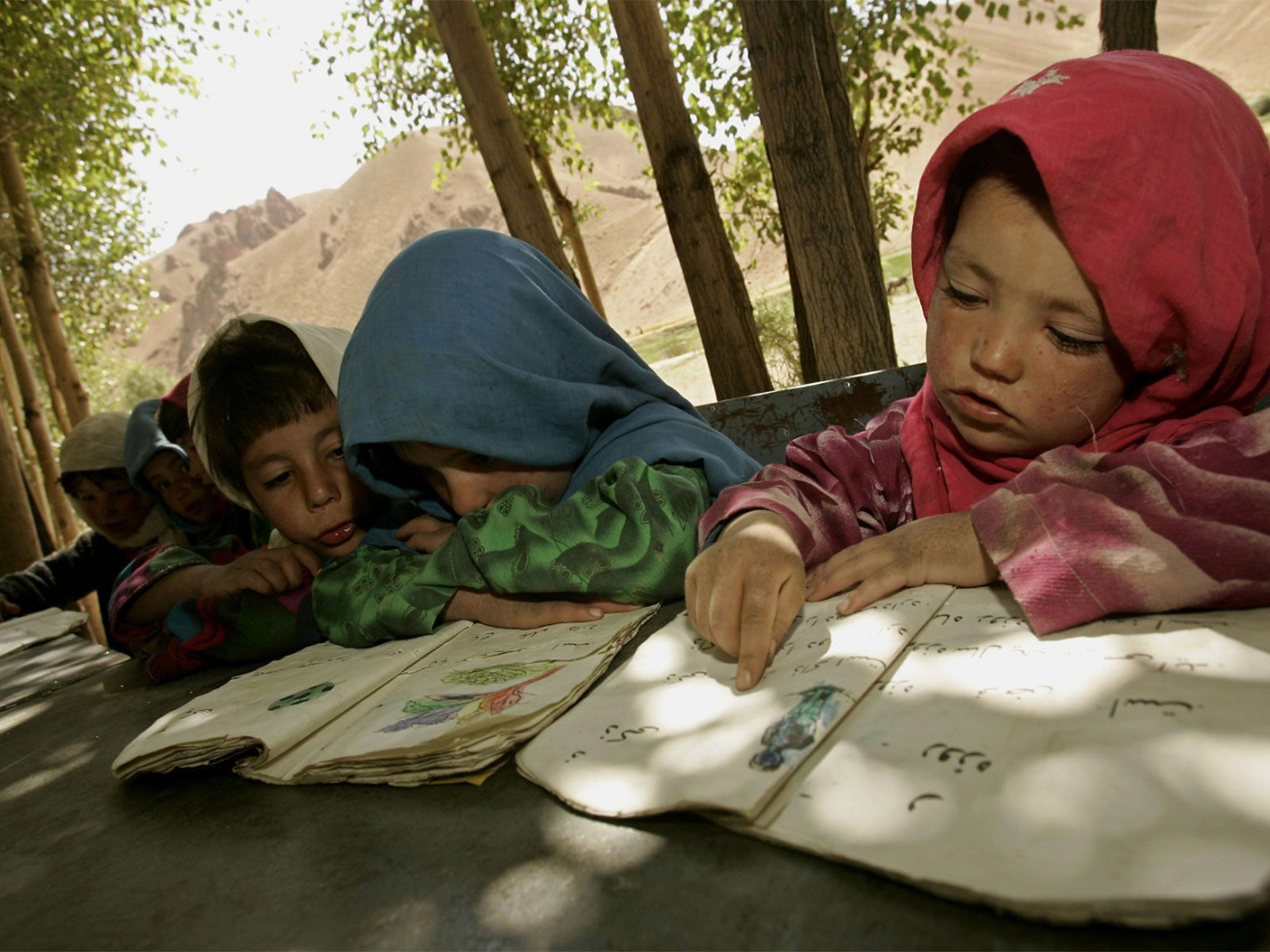
Paris [France], August 12 (ANI): Noting that Afghanistan remains the only country in the world to formally prohibit access to education for girls and women beyond the primary level, UNESCO on Tuesday called for the full restoration of the right to education, warning that the country's ban risks causing "irreversible harm" and decades of lost potential of an entire generation.
According to a statement released by the United Nations body, as of 2026, an estimated 2.4 million girls across Afghanistan remain locked out of classrooms owing to the grim campaign launched by the Taliban in 2021, violating the rights of girls and women, especially their right to education.
"These restrictions are reversing two decades of progress in expanding access to education: while access to schooling for girls was severely limited in 2001, by 2021 nearly one million girls were enrolled in secondary education," UNESCO stated.
UNESCO condemned the ongoing systemic discrimination and underscored the human toll of this enforced silence, declaring that the ban directly threatens the mental and physical well-being of young women, heightens the risk of child marriage and deepens poverty in a country where nearly half the population lives below the poverty line.
"The continued exclusion of girls and women from education constitutes a grave violation of their fundamental human right to learn and risks condemning Afghanistan to decades of lost potential, deepening poverty, and irreversible harm. At a time when nearly half of Afghans live below the poverty line, denying girls and women access to education and restricting their employment further undermines their ability to support their families and contribute to the country's economic future," the statement read.
Furthermore, UNESCO highlighted that the restriction has also created a broader crisis in the school system by prohibiting female teachers from instructing boys; harming the quality of education for young boys as well.
"This exclusion also has harmful consequences on the wellbeing, mental and physical health of girls and women, while increasing the risks of early marriage. The de facto authorities' decision to prohibit female teachers from teaching boys further exacerbates teacher shortages and undermines the quality of education for all," UNESCO stated.
To counter the systemic ban, UNESCO, alongside partners including the Global Partnership for Education, the European Union, and Canada, is delivering community-based literacy, vocational training, and psychosocial support.
"While these initiatives cannot replace access to formal schooling, they provide vital opportunities for learning to continue while restrictions remain in place. To date, nearly 70,000 learners have benefited from UNESCO's programmes, 73 per cent of whom are women," the UN agency noted, highlighting recent studies that show these community classes contribute to increased household income and improved livelihoods.
"Beyond their economic benefits, learners' experience shows that education is not only about acquiring knowledge; it is also a source of dignity and resilience that enables women and their families to better navigate uncertainty and sustain hope in the future," the statement added.
While emphasising that informal classes can never replace a proper school education, UNESCO urged the international community to stay engaged and refuse to look away from the struggles of Afghan women.
"Afghanistan's girls and women have the right to learn, to work, to move freely, and to shape their own futures, and the world must not look away until their human rights are restored," UNESCO declared, demanding an immediate and unconditional end to the ban. (ANI)
"Lost potential, irreversible harm": UNESCO demands full restoration of education rights for Afghan girls as 2.4 Mn denied schooling