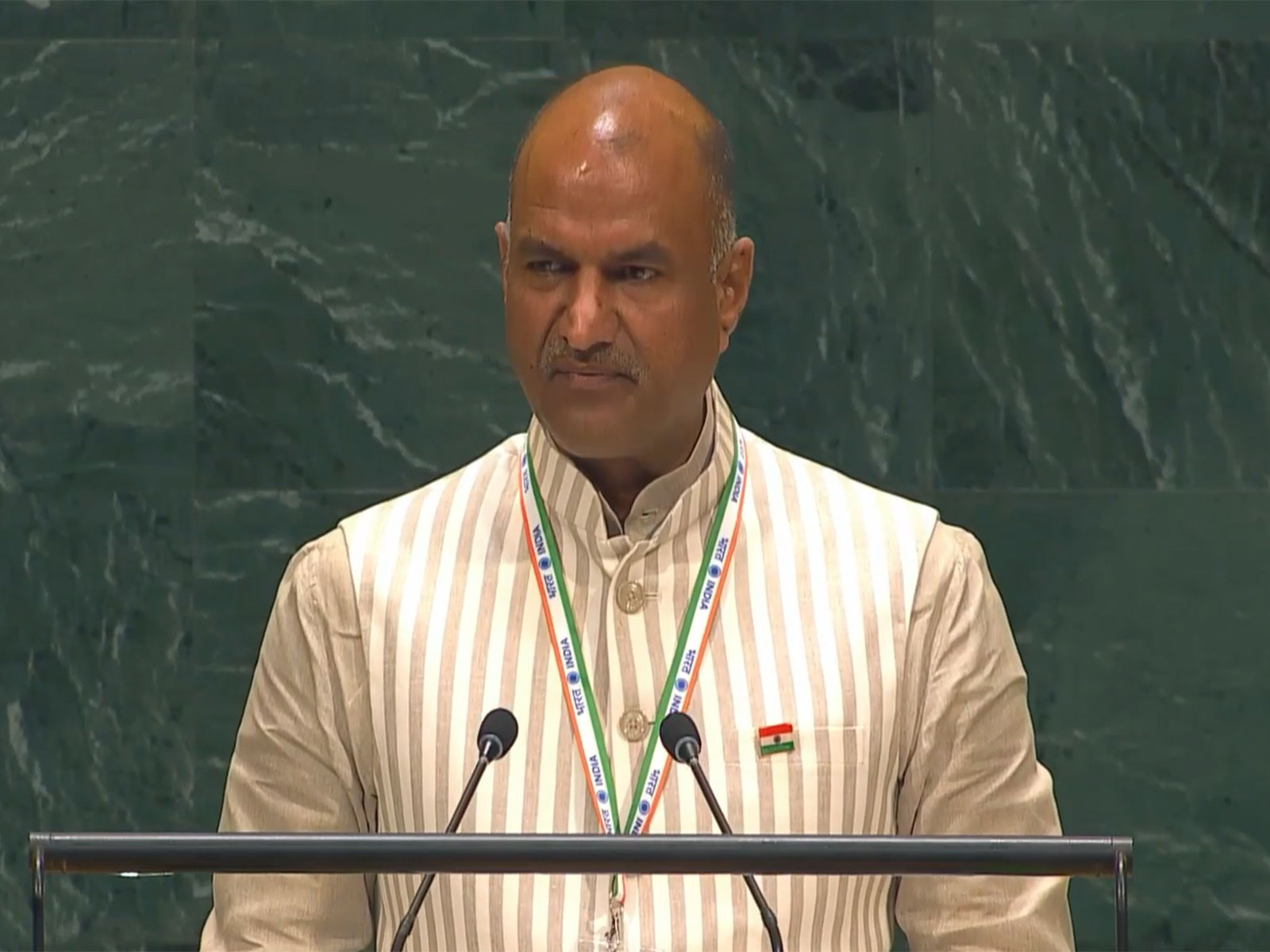
New York [US], October 9 (ANI): India has called for broader reforms of the United Nations, including expansion of the UN Security Council in both permanent and elected categories, with Member of Parliament CP Joshi stressing that the revitalisation of the UN General Assembly (UNGA) must be part of comprehensive efforts to make the global organisation more representative and effective.
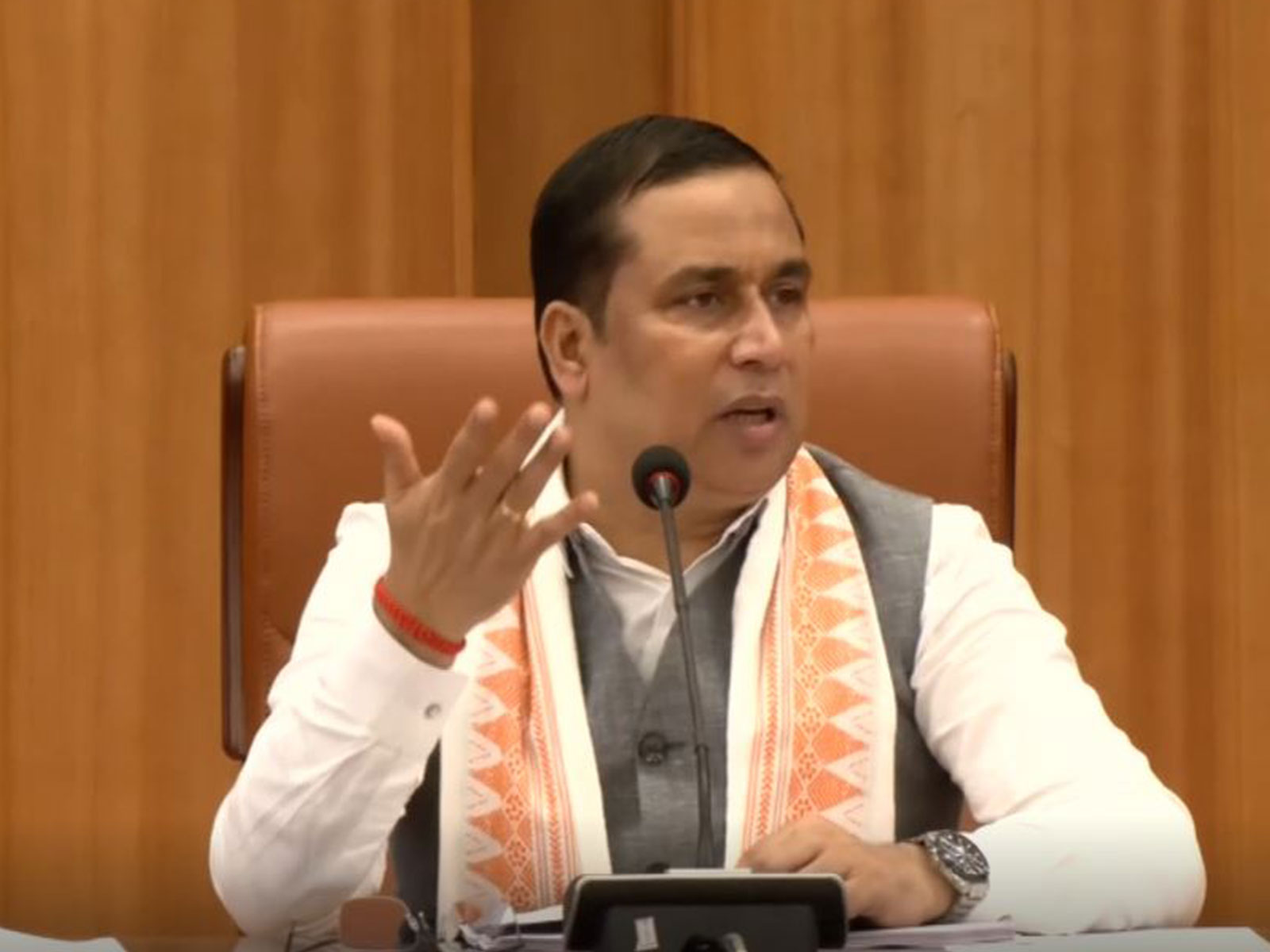
Delivering India's statement at the UNGA plenary on the revitalisation of the work of the General Assembly on Thursday (local time), Joshi reaffirmed India's commitment to strengthening the central role of the Assembly and called for improvements in its working methods, coordination among committees and institutional accountability.
#IndiaAtUN At the #UNGA plenary on revitalization of the work of the General Assembly, Hon’ble Member of Parliament Shri @cpjoshiBJP delivered 🇮🇳's statement. ➡️ Reaffirmed that the UNGA, as the most representative, democratic and universal organ of the @UN, must remain central to the Organization's work. ➡️ Called for a more manageable agenda, greater coherence among the Main Committees and the plenary, and stronger institutional memory and accountability in the Office of the President. ➡️ Welcomed the progress achieved by adoption of Resolution 79/327 and its recognition of UN80 as a useful tool for having an efficient, effective, agile and responsive UN, including the UNGA. ➡️ Noted that Revitalization must be part of broader UN reform, including #UN80 and a Security Council expanded in both permanent and elected categories to reflect today's realities. @PMOIndia @MEAIndia @IndianDiplomacy @airnewsalerts @DDNewslive @PIB_India
— India at UN, NY (@IndiaUNNewYork) October 9, 2026
"India aligns itself with the statement delivered on behalf of the Non-Aligned Movement," Joshi said. "I reiterate India's commitment to strengthening and revitalizing the central role of the UN General Assembly. As highlighted in Resolution 79/327, no other UN organ can match the General Assembly in terms of universality and representativeness. It is the intergovernmental nature of the General Assembly that accords it this central position. This status must be respected not merely in words but also in the true spirit of its mandate."
UN General Assembly Resolution 79/327, adopted on September 5, 2025, focuses entirely on the "Revitalization of the Work of the General Assembly".
On improving the Assembly's working methods, he said, "Regarding working methods, we see scope for improvement in three areas. First, the agenda should be made more practical and manageable. Similar or overlapping topics should be consolidated, and--where appropriate--deliberations on certain subjects could take place at intervals of two or three years. This would allow discussions to be more meaningful, well-considered, and focused. Second, better coordination, coherence, and complementarity should be ensured among the General Assembly’s Main Committees, as well as between these committees and the plenary sessions of the Assembly. Third, the Human Rights Council was established two decades ago as a subsidiary intergovernmental body of the General Assembly with a specific mandate. Duplicating its work in New York is unnecessary; the process needs to be streamlined."
Joshi also underscored the importance of strengthening the Office of the President of the General Assembly, including its efficiency, transparency, accountability and institutional memory.
"Regarding the Office of the President of the General Assembly, India attaches great importance to this vital pillar of the Assembly and fully supports its smooth functioning. We reaffirm our commitment to working in alignment with the President's priorities. India will continue its efforts to strengthen the efficiency, transparency, accountability, and institutional memory of this office," he said.
Turning to the selection of the next UN Secretary-General, Joshi said the process was taking place at a critical juncture for the organisation, amid serious challenges and growing geopolitical fragmentation.
"The selection of the next UN Secretary-General is taking place at a critical juncture. The United Nations faces serious challenges, and the need for reform is greater than ever. Geopolitical fragmentation is also undermining the UN's ability to fulfill its core mandates, particularly the maintenance of international peace and security. In this context, it is essential that the best candidate be appointed to this position. As with appointments to other senior leadership roles within the UN, geographical balance must be a guiding principle of this process. India supports a more significant role for the General Assembly in this process and looks forward to working with other member states to achieve this objective," he said.
Welcoming progress following the adoption of Resolution 79/327, Joshi highlighted the role of the UN80 initiative in improving the organisation's functioning.
The UN80 Initiative is structured around three distinct workstreams designed to systemically streamline operations, optimize mandate lifecycles, and programmatically realign the United Nations.
"We welcome the progress made following the adoption of Resolution 79/327. It is noteworthy that this resolution recognises the UN-80 initiative as a useful vehicle for creating a more efficient, effective, dynamic, and responsive United Nations--one that includes the General Assembly," he said.
He further stressed the need for effective implementation of mandates across the UN's three main pillars.
"Ensuring the effective and efficient implementation of mandates related to the UN's three main pillars--peace and security, development, and human rights--is crucial. We remain ambitious regarding the potential of the UN-80 initiative," Joshi said.
Emphasising that reforms should extend beyond the General Assembly, he said, "The revitalisation of the General Assembly should be pursued as part of broader, comprehensive UN reforms to make the organisation more representative, effective, and capable of fulfilling its objectives. The revitalisation of key UN organs cannot be limited to the General Assembly alone."
Joshi also called for urgent reform of the Security Council, arguing that its current functioning raised questions about the UN's ability to fulfil its mandate of maintaining international peace and security.
"The Security Council's inability to effectively discharge its mandate of maintaining international peace and security casts doubt on the functioning of the United Nations as a whole. Effective reform of the Security Council, including an expansion of membership in both permanent and elected categories, can no longer be postponed. It is essential that the Security Council reflects today's global realities and enables the United Nations to address current challenges," he said.
During his address, Joshi reiterated India's commitment to working with other member states to strengthen the General Assembly.
"In conclusion, I would like to reiterate that India will continue to work constructively and in good faith with all member states to strengthen the functioning of the General Assembly," he said.
In a post on X on Thursday (local time), India's Permanent Mission to the United Nations in New York also said that Joshi had delivered India's statement at the plenary session, reaffirming that the UNGA, as the most representative, democratic and universal organ of the United Nations, must remain central to the organisation's work.
The mission also highlighted India's call for a more manageable agenda, greater coherence between the Main Committees and plenary, stronger institutional memory and accountability in the Office of the President, and comprehensive UN reforms, including an expanded Security Council. (ANI)