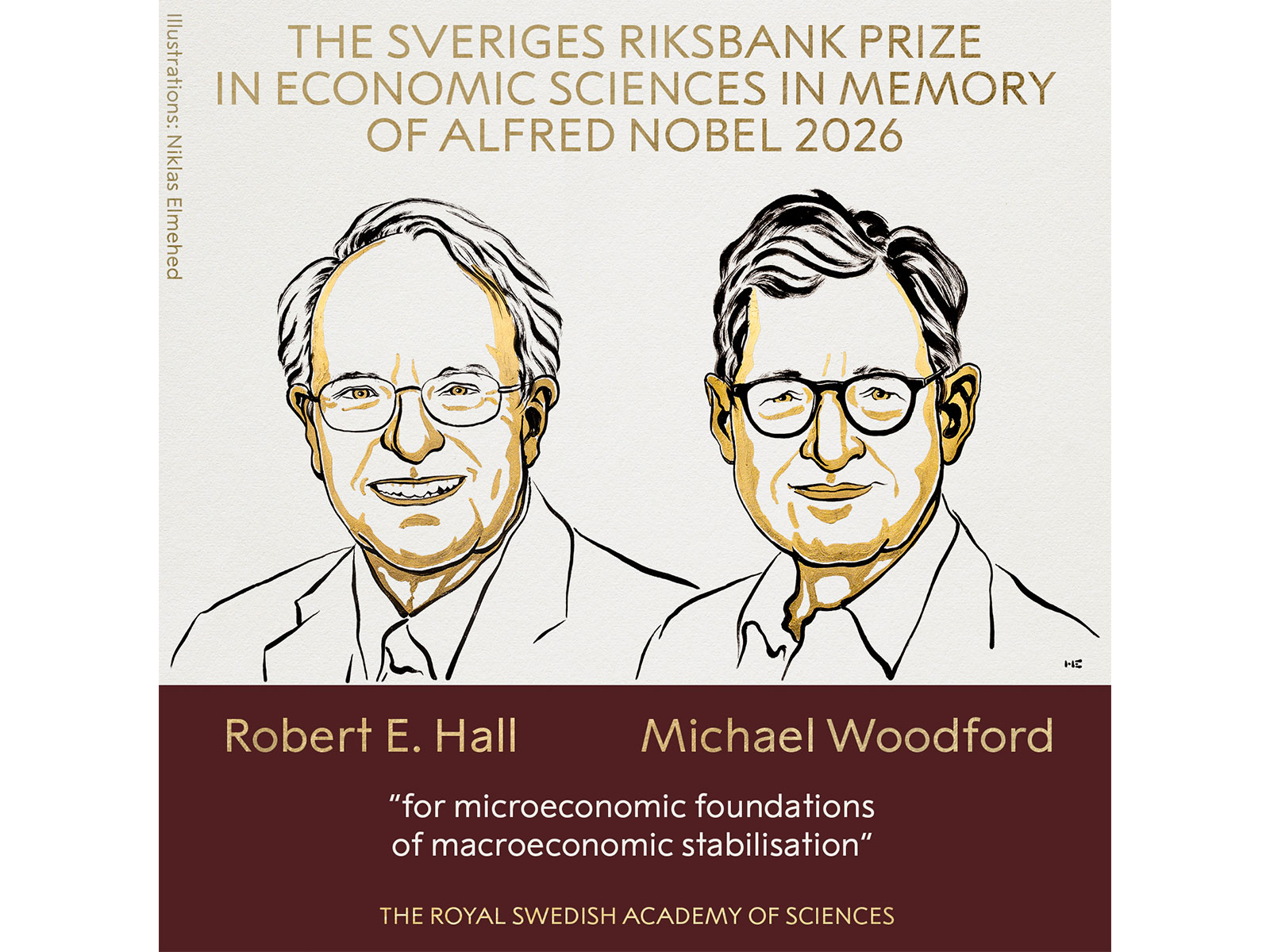
Stockholm [Sweden], October 12 (ANI): The Royal Swedish Academy of Sciences on Monday awarded the 2026 Sveriges Riksbank Prize in Economic Sciences to Robert E Hall of Stanford University and Michael Woodford of Columbia University for their work on the “microeconomic foundations of macroeconomic stabilisation.”
In a post on X, the Royal Swedish Academy of Sciences said it had decided to award the prize to Hall and Woodford for their contributions to developing economic models that have significantly improved the ability of governments and central banks to implement effective stabilisation policies.
“The laureates’ work has provided us with a stable theoretical foundation for the models that are now used by central banks and governments around the world,” said John Hassler, Chair of the Committee for the Prize in Economic Sciences.
He added that these models help policymakers respond to economic shocks, including energy crises and sudden changes in household consumption.
The prize carries an award of 12 million Swedish kronor, which will be shared equally between the two laureates.
According to a press release, the laureates developed new macroeconomic models that help policymakers address economic fluctuations through well-timed fiscal and monetary measures, thereby reducing the peaks and troughs of economic activity.
The academy noted that stabilisation policies have long been central to economic management, particularly during recessions, when lowering interest rates and increasing budget deficits can stimulate growth. Conversely, measures to slow economic activity may be necessary during periods of economic overheating.
Hall and Woodford helped revitalise stabilisation policy by building economic models on microeconomic foundations, examining how individual households and businesses make decisions and collectively influence broader economic outcomes.
A key feature of their work is the recognition that households and businesses make forward-looking decisions about savings, consumption and prices. By communicating policy plans, governments and central banks can influence expectations and guide economic activity.
The economic crises of the 1970s exposed shortcomings in traditional Keynesian models, as attempts to tackle unemployment contributed to uncontrolled inflation, resulting in a prolonged period of low growth, high unemployment and rising prices. (ANI)
Robert E Hall, Michael Woodford win 2026 Economics Nobel for microeconomic foundations of macroeconomic stabilisation