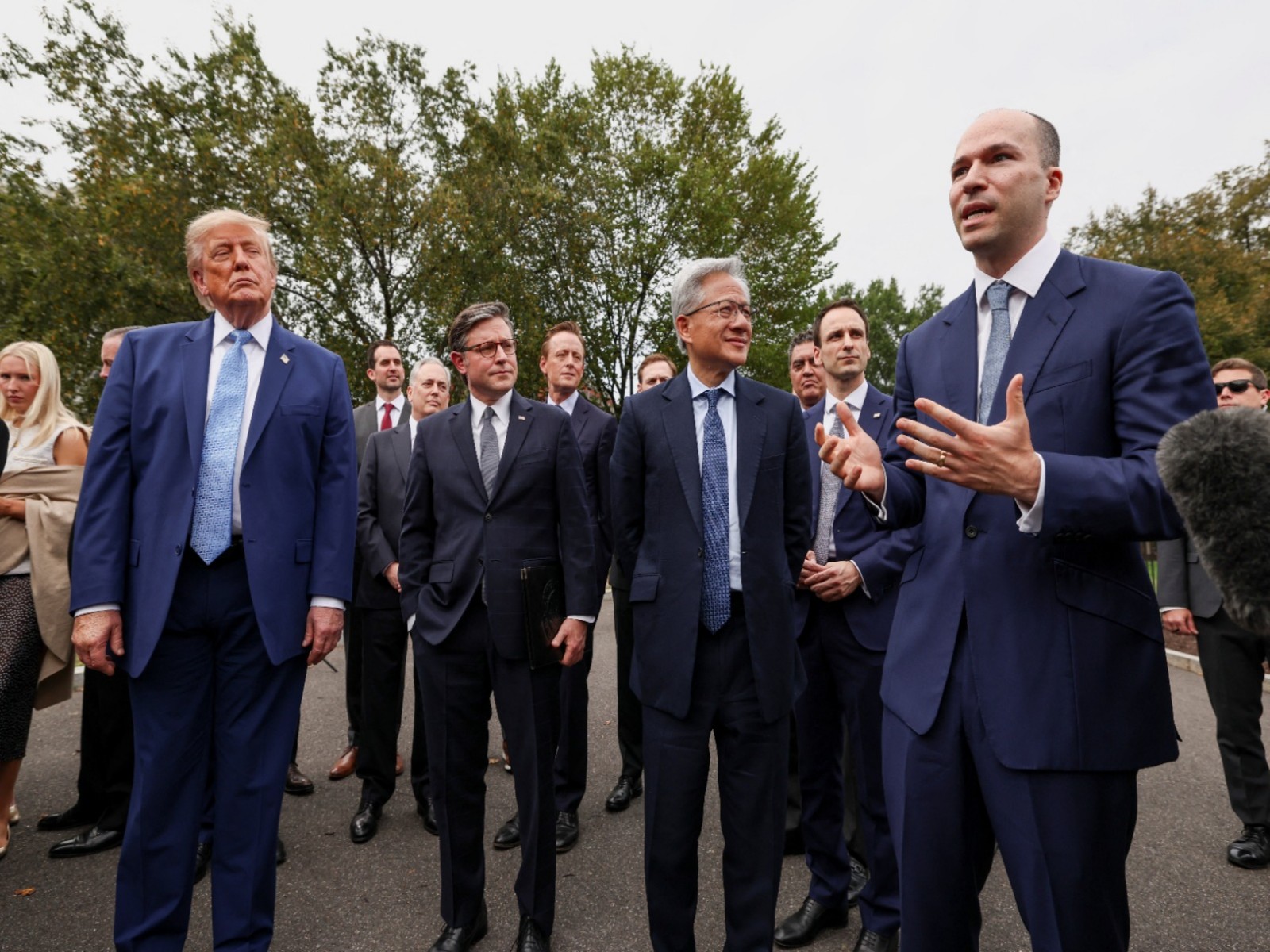
Washington DC [US], September 30 (ANI): United States President Donald Trump and the chief executives of leading technology companies on Tuesday (local time) have signed a joint, "morally binding" accord committing to implement a comprehensive framework of "four layers of controls and audits" to govern the safety of frontier computing models, while keeping the door open to future legislative codification.
The signed document, titled "Joint Commitment on Frontier Responsibilities," was released following a high-level White House summit on what the administration has formally designated as "Super Intelligence," following suggestions from the tech bosses to slow the pace of Frontier AI development or risk losing control.
The agreement bears the personal signatures of President Donald Trump alongside the heads of the foremost tech developers: Sundar Pichai of Google, Dario Amodei of Anthropic, Mark Zuckerberg of Meta, Greg Brockman of OpenAI, Elon Musk of xAI, and Jensen Huang of Nvidia.
"In order to build a positive future for the American people and the world, we believe every company is responsible for developing its own technology safely and in a way that builds trust with customers and the public," the joint declaration stated, adding that companies training and deploying frontier models must implement robust processes to resolve issues promptly.
To achieve this, the document mandates that each participating company implement four specific layers of controls and audits.
As the first layer, companies are required to “implement robust internal controls to monitor the capabilities and alignment of their models during training and deployment around areas like cybersecurity, biosecurity, and chemical threats, and to ensure that their models do not hack or access technical systems in unintended ways.”
Under the second layer, companies must “empower an internal team to ensure all of the controls, monitoring, and detection are operating as intended, and that any issues are remediated.”
The third layer introduces independent external scrutiny, requiring tech companies to “partner with an independent external auditor or evaluator to carry out independent assessments of whether the controls, monitoring, and detection are operating as intended.”
As the fourth layer, the agreement mandates the designation of an “independent committee of the board of directors to oversee and receive reports from the teams operating the controls and the internal and external auditors and evaluators, as well as to ensure any issues identified are remediated.”
The declaration emphasizes that together, these four layers of controls and audits will give each company, its customers, and the public confidence that the technology is operating as intended.
The participating technology companies further agreed to meet on a regular basis to formulate updated safety standards and best practices as model capabilities advance.
Notably, while the accord represents a voluntary commitment to self-regulation, the signatories formally acknowledged that these measures could transition into mandatory federal statutes.
"Over time, it may make sense to codify these steps into laws or regulations. Regardless of whether this is required of companies, we believe that implementing these controls and audits is critical to ensuring a safe future for everyone, and each of our companies are committed to doing this," the signed document stated. (ANI)
Trump-Tech czars sign "morally binding" accord on super intelligence, tighter guardrails on cards